Andrea Passerini
I work at the intersection of learning and reasoning, building human-centric AI: structured & neuro-symbolic machine learning, explainable and interactive ML, preference elicitation and human-cognition-aware AI, always with an eye on how these systems are actually used by people, not just how well they perform in isolation.
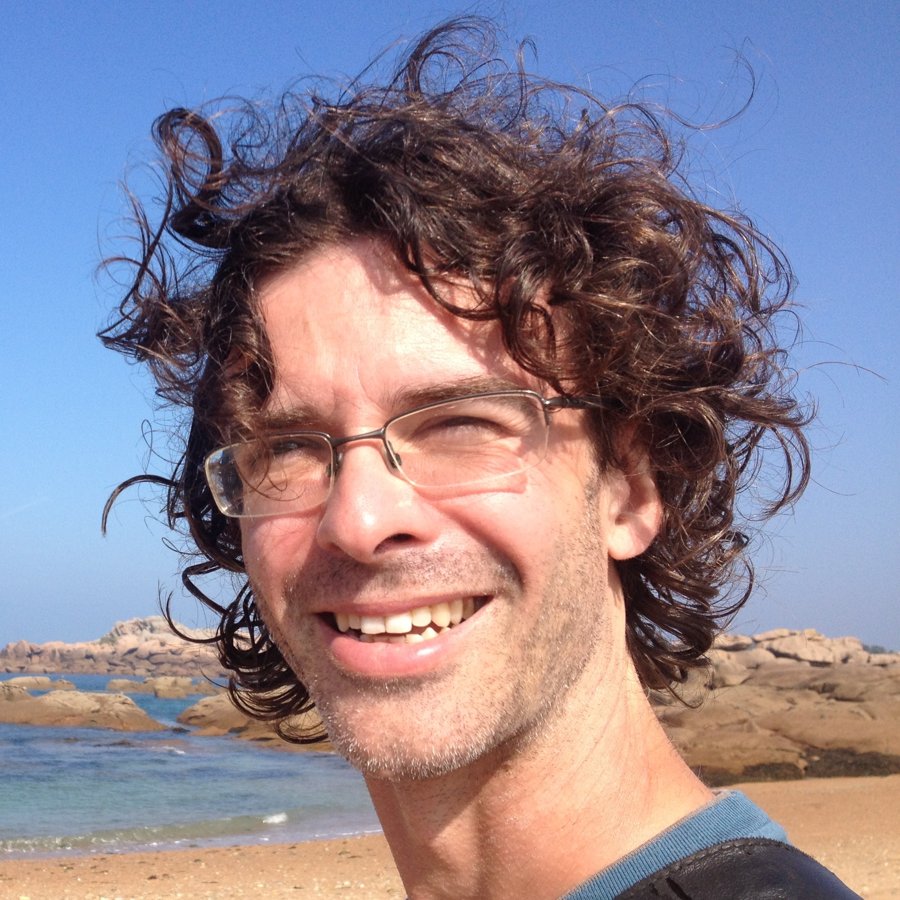
Short Bio
I am a Full Professor at the Department of Information Engineering and Computer Science (DISI), University of Trento, where I've been on faculty since 2009 (Assistant Professor 2009–2015, Associate Professor 2015–2024, Full Professor since 2024). I hold a PhD in Computer Engineering from the University of Florence (2004). I coordinate the IECS Doctoral School and was President of the ECML PKDD steering committee (2019–2023), of which I am now Honorary President. My research sits at the intersection of learning and reasoning, see Research Topics below for what that means in practice.
I head the Structured Machine Learning (SML) lab, where a group of PhD students, postdocs and assistant professors work on these problems together. I coordinate TANGO, a €8M Horizon Europe project spanning 21 partner institutions focusing on human-machine mutual understanding for hybrid decision making. I've co-authored over 170 refereed papers, including more than sixty journal articles, and my h-index is 43 (Google Scholar, Aug 2026).
Research Topics
Structured & Neuro-Symbolic ML
Combining statistical learning with logic and constraint reasoning; reasoning shortcuts and concept-based models.
Explainable & Interactive ML
Explainability for Graph Neural Networks, self-explainable architectures, and interactive label cleaning.
Preference Elicitation
Constructive, coactive elicitation methods for recommendation, bundling and personalized decision support.
Learning & Reasoning in Hybrid Domains
Weighted model integration and probabilistic inference over algebraic and logical constraints.
Human-Machine Decision Making
Algorithmic recourse, learning to defer, and calibration for reliable human-AI collaboration.
Applications
Bioinformatics, recommender systems, and clinical/legal decision support.
Highlights
Selected awards: Best Full Paper Award, RecSys 2025 · Best Student Paper Runner-up Award, UAI 2025 · Best Working Paper Award, HHAI 2023 · Best Blue Sky Ideas Paper, AAAI HCOMP 2021 · Best Paper Award, UAI 2015 · Best Paper Award, MIC 2013. Area Chair for IJCAI (2020–2022) and ECML PKDD (2018–2026); Action Editor for the Machine Learning journal and Associate Editor for the Artificial Intelligence journal. Full list of roles, awards and funded projects in the CV.
Publications
My full, continuously updated publication list lives on Google Scholar — it's the most reliable and current source, sorted by publication date.
Structured Machine Learning Lab

sml.disi.unitn.it
People, research themes, open-source software, funded projects (TANGO, TAILOR Network, FAIR) and the lab's full, auto-updated publication list.
Teaching
Advanced Topics in Machine Learning and Optimization
6 CFU · MSc in Artificial Intelligent Systems · with Stefano Teso
Machine Learning
12 CFU · MSc in Artificial Intelligent Systems · with Farid Melgani and Elisa Ricci
Scientific Programming
6 CFU · MSc in Quantitative and Computational Biology
Past courses: Informatica, BSc in Biomolecular Sciences and Technology (2008–2020) · Bioinformatics, Doctoral Course in Biomolecular Sciences (2009–2019) · Statistical Relational Learning, ICT Doctoral School (2009–2013) · Complex Systems, ICT Doctoral School (2008–2009).
Full syllabi, schedules and materials — including the 2025–2026 archive →